By Ezekiel Nganga,
For decades, agricultural innovation has meant better seeds, fertilisers, machinery and technologies that help farmers produce more. As African cities continue to grow and agriculture becomes more urban, however, another innovation is hard to ignore – how to manage the water that sustains food production.
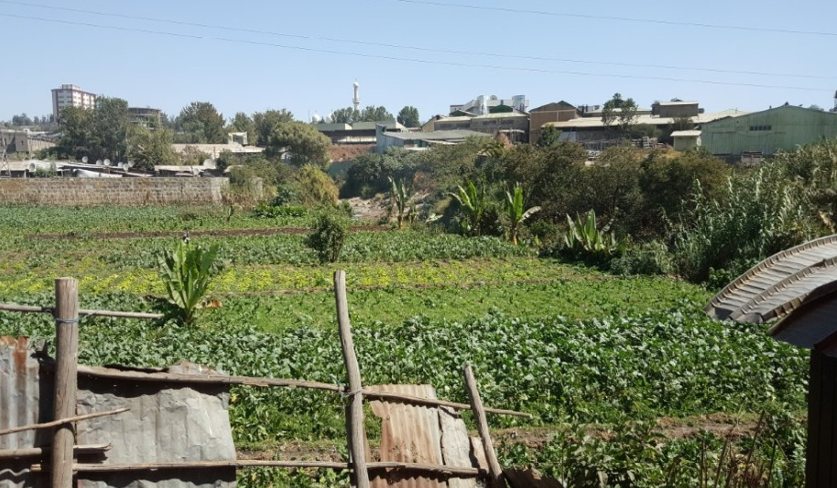
In Addis Ababa, rivers and streams that sustain peri-urban farms also carry wastewater and pollutants from the city. For farmers who depend on these rivers, water is more than a resource. It is an agricultural input that can affect productivity, soil health, food safety and livelihoods.
For Prof. Adey Feleke Desta, an associate professor of environmental microbiology at Addis Ababa University, understanding that connection has become the focus of years of her research.
Her journey began during her PhD research on tannery wastewater, when she encountered farming communities downstream from a tannery using polluted water for irrigation and domestic activities. Crops had been found to be contaminated with chromium, productivity had been low and negative health impacts had been noted in animals and children.
That experience led to a larger question – what happens when the water that flows through a city turns into the water that flows into the farms?
Prof. Desta describes her current research as an effort to introduce “barriers to urban river pollution for a productive peri-urban agriculture, healthy farmer and consumer lives.”
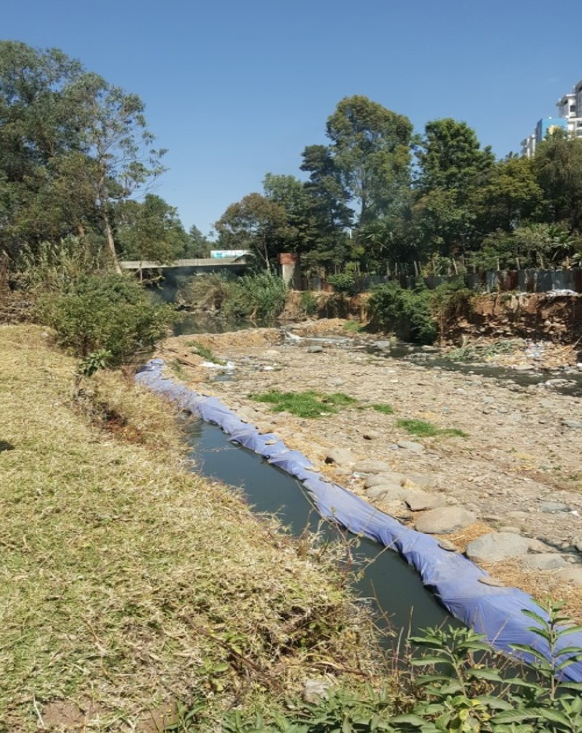
Urban rivers can receive water from households, industries, health facilities, breweries and abattoirs. According to Prof. Desta, the river water carries a range of organic and inorganic pollutants such as Nitrogen, Phosphorus, Sulphur and accumulated micronutrients such as manganese, cadmium and chromium. In addition, faecal matter, which can carry disease-causing microorganisms, is often transported by the water to irrigation farms. Some of these pathogens may also carry antimicrobial resistance genes, raising concerns about the potential transmission of antimicrobial resistance along the food chain.
Research associated with the project found multidrug resistant bacteria in irrigation water, soil and crops, with the wider project reporting a 21% prevalence of multidrug resistant bacteria in irrigation water.
“Most of them are unaware of the pollutants and antimicrobial resistance issue, since the water looks clean,” Prof. Desta says of farmers. “During the dry season, there is no other option, so they keep on practising irrigation using the same water,” she added.
When irrigation water carrying resistant bacteria reaches farmland, those bacteria can become part of the soil microbiome. Prof. Desta explains that genetic material associated with antimicrobial resistance can transfer between bacteria in the soil. Vegetables growing in that environment can then become part of the pathway from river to consumer.
Farm workers are also at risk. Farm work is frequently manual and sometimes performed in bare feet, exposing workers to contaminated soil.
“Using the same river water to wash does not remove these bacteria from their skin,” Prof. Desta says. The vegetables then enter urban markets, with particular concern for produce such as lettuce and tomatoes that may be eaten raw.
For Prof. Desta, the answer is not simply to tell farmers to stop using polluted water. African cities need to change the systems around them.
She advocates decentralised wastewater management, separating wastewater from stormwater, stronger governance and enforcement, and greater collaboration between city and agriculture authorities.
She also sees potential in Africa’s own natural resources. “Africans have a lot of nature based technologies that can be used for pollution control,” she says, pointing to green infrastructure and nature based solutions to purify urban rivers before they reach farms.
For Prof. Desta, water quality science and agricultural innovation are inseparable. “These two should be considered as the two faces of a coin,” she says.
As Africa’s cities grow, agricultural innovation may therefore need to look beyond what happens in the field. The future of urban farming could depend not only on what farmers plant in the soil, but on what cities allow to flow into it.