By: Dr. Godfrey Ngure,
Africa’s agricultural biotechnology landscape is evolving rapidly.
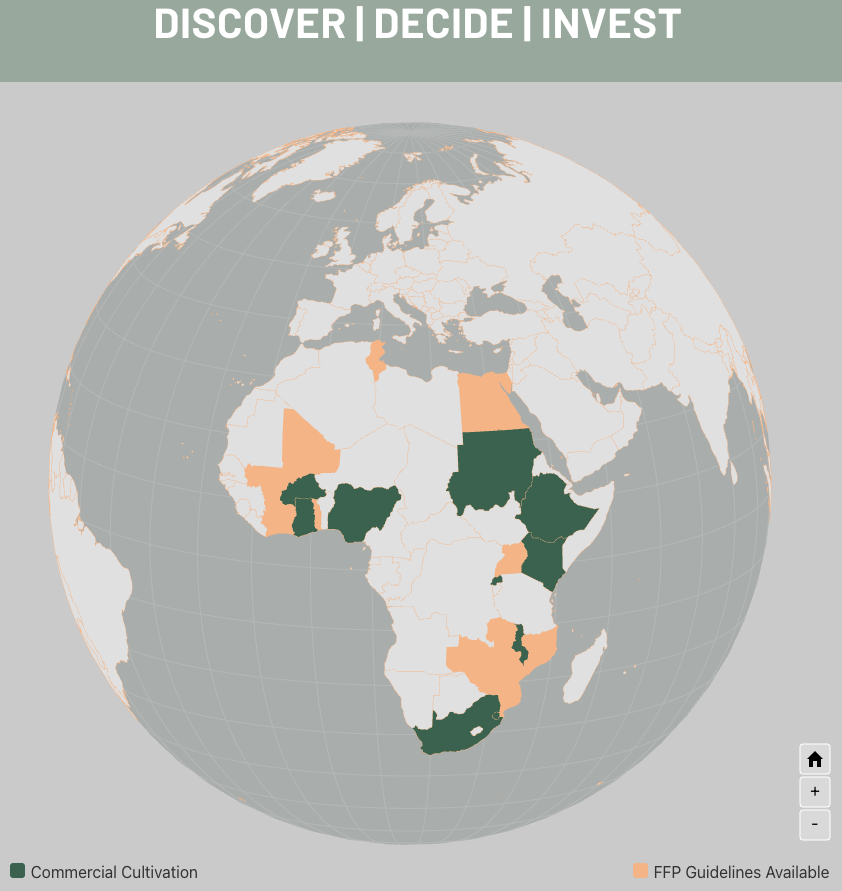
Today, nearly 4 million hectares of biotech crops are grown across the continent, representing a 3.6% increase from the previous year. Six biotech crops – cotton, maize, soybean, cowpea, cassava, and potato – are now part of Africa’s agricultural landscape, while 10 countries are cultivating biotech crops and additional countries continue to expand their approvals. Importantly, Africa has also contributed two global firsts: the world’s first approved Bt cowpea in Nigeria and Ghana, and the world’s first regulatory approvals for genetically modified (GM) cassava in Kenya and Rwanda.
Globally, agricultural biotechnology now spans 218.7 million hectares across 44 cultivating countries, with another 29 countries approving biotechnology products for food, feed, and processing (FFP). These numbers tell an important story: agricultural biotechnology is no longer an emerging technology. It is an established component of modern agriculture and an increasingly important tool for addressing food insecurity, climate change, pests and diseases, and declining agricultural productivity.
Yet, despite this progress, one challenge remains surprisingly persistent – access to credible, up-to-date, and country-specific information that enables informed decisions.
For many researchers, regulators, traders, and technology developers, obtaining information on biotechnology approvals and regulatory requirements in Africa remains difficult. Information is often scattered across multiple agency websites, hidden in gazette notices, or buried in lengthy regulatory documents that are difficult to locate and interpret. In some cases, stakeholders rely on informal sources or outdated information, creating uncertainty and avoidable delays.
In an era where scientific, regulatory, and investment decisions increasingly depend on timely access to information, this information gap has become more than an inconvenience – it is a barrier to informed decision-making, innovation, trade, and responsible technology deployment.
Consider the perspective of a trader seeking to import a GM commodity into an African country. The questions are straightforward: Has the product been approved? What are the permit requirements? Is labeling mandatory? How long does the approval process take? What are the conditions for transit through neighboring countries?
Finding answers to these seemingly simple questions can take days – or even weeks.
For businesses, uncertainty translates into increased transaction costs and investment risks. For regulators, limited visibility of decisions made elsewhere on the continent reduces opportunities for peer learning and regulatory cooperation. For researchers and technology developers, poor access to information can delay planning and the translation of innovations from the laboratory to farmers’ fields.
The consequences extend beyond individual institutions. Information asymmetry slows regional integration and undermines Africa’s ability to fully leverage agricultural biotechnology to support agricultural transformation and food security.
Fortunately, the continent is also witnessing a growing appreciation of the value of transparency and information sharing. Regional initiatives such as the Common Market for Eastern and Southern Africa (COMESA) biotechnology and biosafety framework recognize that sharing information and experiences can improve efficiency, facilitate trade, and reduce unnecessary duplication in decision-making.
Increasingly, Africa’s biotechnology future will depend on our ability to share information and leverage data transportability. The experience and evidence generated in one country can help inform decisions in another, reducing unnecessary duplication, accelerating approvals, facilitating trade, and improving access to emergency biotech-based food.
This is precisely the gap that Biotech Africa seeks to address by placing credible information at the center of decision-making.
Launched by ISAAA AfriCenter in June 2026, Biotech Africa is a regional information platform designed to improve access to credible agricultural biotechnology information across Africa. The platform consolidates country-specific information on GM crop approvals, importation requirements for food, feed, or processing, application procedures for import permits, and links to official regulatory decisions and competent authorities.
Importantly, Biotech Africa is not a regulatory authority and does not make decisions on behalf of countries. Rather, it serves as an information bridge – connecting users to official decisions, regulatory processes, and authoritative sources in a format that is easy to access and navigate.
The value of such a platform extends well beyond convenience; it lies in enabling better, faster, and more informed decisions.
For traders and investors, access to centralized information improves planning, reduces uncertainty, and facilitates compliance with national requirements. For regulators, it provides opportunities for peer-to-peer learning and greater transparency. For researchers and technology developers, it offers a clearer understanding of the regulatory landscape and supports the responsible deployment of innovations.
Perhaps most importantly, credible information helps replace speculation with evidence.
At the launch of Biotech Africa, one participant aptly remarked that the platform comes at a crucial time when access to reliable, science-based information is essential for advancing research, innovation, policy development, and public understanding across Africa. That sentiment captures the very essence of why this platform matters.
Biotech Africa did not emerge in isolation. Its development was inspired in part by the pioneering work of Biotec-LATAM and the dedicated team at ArgenBio, whose commitment to making biotechnology information accessible, transparent, and useful demonstrated the transformative power of shared knowledge. Their experience provided valuable lessons and reaffirmed the importance of credible information in enabling informed decision-making.
As Africa’s biotechnology ecosystem continues to mature, credible information will become an increasingly strategic resource. The continent’s ability to responsibly deploy agricultural biotechnology, facilitate trade, and accelerate innovation will depend not only on scientific advances or regulatory capacity, but also on our ability to ensure that reliable information is accessible to everyone who needs it.
A farmer in Nigeria, a regulator in Malawi, a trader in South Africa, and a researcher in Kenya should all be able to access the same reliable information about biotechnology developments across the continent. Because informed decisions require informed stakeholders.
Ultimately, the future of agricultural biotechnology in Africa will not be shaped by innovation alone. It will also be shaped by our ability to ensure that credible information is accessible, transparent, and available to everyone who needs it.
That is the vision behind Biotech Africa – fostering informed decisions through credible biotechnology information.
About the Author
Dr. Godfrey M. Ngure is a Senior Program Officer at ISAAA AfriCenter, where he leads initiatives in science communication, science diplomacy, and policy advocacy to advance the responsible development and deployment of agricultural biotechnology in Africa. He holds a Ph.D. in Biotechnology from the University of Tsukuba, Japan. Dr. Ngure is passionate about bridging science, policy, and society and has extensive experience in stakeholder engagement, biotechnology communication, and fostering networks of early-career bioscience professionals across Africa. His work focuses on leveraging science, technology, and innovation to support sustainable agricultural development and evidence-based decision-making.
He can be reached at gmngure@isaaa.org or connected with on LinkedIn.